
Digging History Magazine: Subscription by Check?
 Potential Digging History Magazine customers have been asking. “Can I pay by check?” The answer is “Yes” but for subscriptions only. Monthly and Special Edition issues are by Credit Card or PayPal only. Why is that? It would simply be too cumbersome to keep up with monthly individual issue purchases. However, since subscriptions are for a term of your choosing (3-month, 6-month or one-year) it’s a bit easier to accept checks and keep track of customers.
If you’d like to buy a subscription, but prefer to pay by check, simply send a message on the Contact Page. I’ll contact you and make arrangements for payment by check. Note: Payment via Credit Card or PayPal is preferred because it’s easier to keep track of subscribers, but realize some customers aren’t comfortable making purchases online.
Payment by Credit Card or PayPal (safe and convenient payment gateways) assures you will receive your first issue immediately. Paying by check will delay delivery of your first issue because the check must be mailed and processed before you receive your first issue.
I appreciate your interest in Digging History Magazine and I’m proud to offer it to like-minded lovers of history! Subscriptions are now available. Purchase any subscription level this month (February) and you’ll also receive a free copy of the inaugural January issue.
Sharon Hall, Publisher and Editor, Digging History Magazine
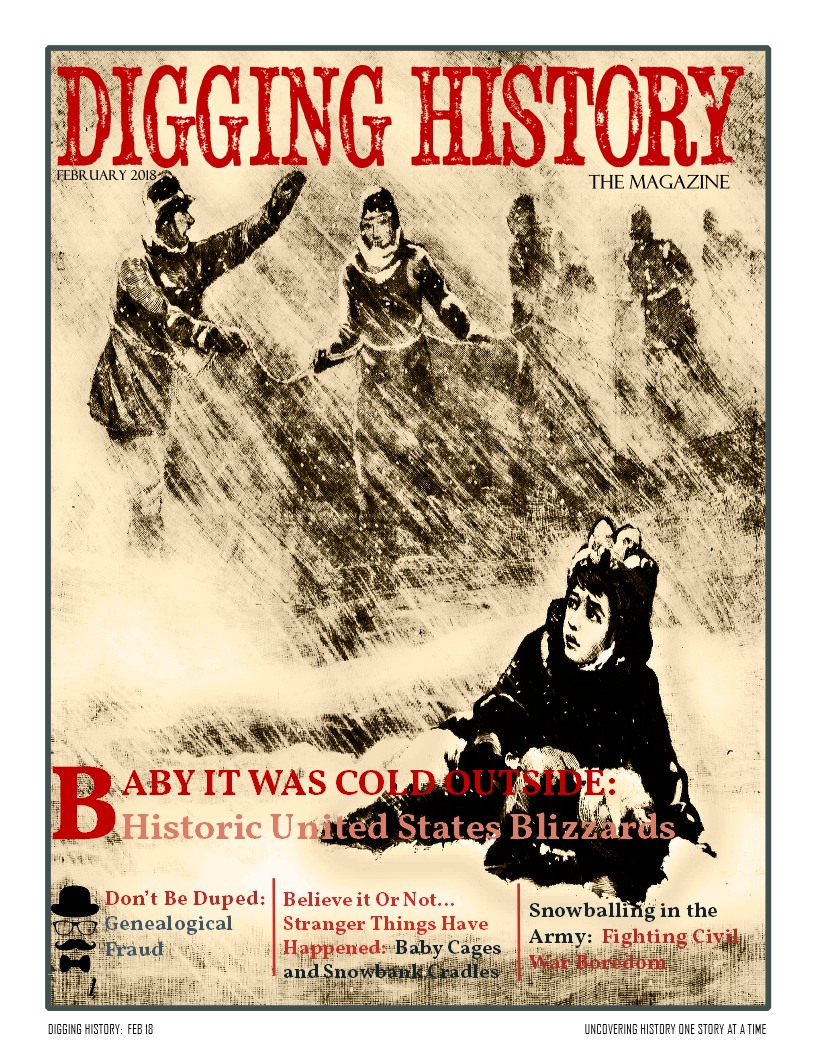
Baby, It Was Cold Outside: Historic United States Blizzards
 The word “blizzard”, at least in terms of a violent snowstorm, hasn’t been around as long as one might think. “Blizzard” or “Blizard” are ancient family names, although speculation abounds as to its origin as a surname. One source proposes it may have been a variant of the word “blessed”, perhaps even a nickname.
Two instances in Olde English (”blieths”) and Middle English (”blisse”) mean joy and gladness, and by adding the French suffix “-ard” a term emerges which means a person with those particular qualities. It is only a theory, however.
The word “blizzard” came into usage in America, perhaps in the early nineteenth century, but not as a reference to a snow storm. Colonel David “Davy” Crockett used the term in a memoir of his tour to the “North and Down East”. At Delaware City he boarded a steamboat to Philadelphia and at dinner with his fellow passengers was called upon to offer a toast. Not knowing the sort of people he was dining with, nor what they thought of him personally, he wrote:
. . . . .
The Washington and Jefferson Snow Storm of 1772
This historic storm, called the Washington and Jefferson Snow Storm of 1772, was one of the largest snow storms to ever hit the northern Virginia and Washington, D.C. area . At the time, George Washington and Thomas Jefferson were prominent landowners and both were interested in the weather and how it affected their agricultural interests. We know this because both future presidents recorded weather details in their personal diaries.
. . . . .
The School Children’s Blizzard
This epic storm is reminiscent of an episode of Little House On The Prairie, entitled “Blizzard”. It may well have been based on the 1888 storm which came to be called “The School Children’s Blizzard” or the “School House Blizzard.”
On January 12, 1888 the weather had cleared after a late December-early January storm system dropped massive amounts of snow across the northern and central plains, which was then followed by a four-day cold blast of extremely low temperatures. Between January 11 and the early morning of January 12, many places saw temperatures rise dramatically, twenty to forty degrees.
The temperatures had risen in advance of a significant Arctic cold front being fed by Gulf of Mexico moisture. Many had been home-bound for days because of the snow, ice and brutally cold temperatures. The “balminess” of January 12 lured people out of their homes – little did they realize how quickly the weather was about to change.
, , , , , ,
1913: The Year of Epic Weather Disasters
From beginning to end, the year 1913 was a meteorologically-challenging year. In 1912 the Mississippi River had flooded, killing two hundred people and causing $45 million in damages.
1913 would bring even more catastrophic weather events with extremes from epic blizzards to rain in near “biblical proportions” to scorching summer heat. On July 10, 1913 the highest temperature ever recorded in the United States occurred in Death Valley (134 degrees!).
. . . . . These are but a few snippets of the feature article on historic United States Blizzards. To read the entire article (complete with footnotes and sources), purchase the February issue of Digging History Magazine ($3.99). A few sample pages are available for download at this link if you’d like to see the entire table of contents. This issue features several articles, most related to snow in some way — amazing how much history one can find about snow, blizzards and such — baby cages and snowbank cradles, the ghost town of Snowball, Arkansas, Civil War snowball fights and more. An information-packed 52-page issue which includes a bibliography and a special supplement relating to an article about genealogical fraud.
Keywords: The Big Die-Up, The Great White Hurricane, Children’s Blizzard, Washington and Jefferson Snow Storm of 1772, Great Blizzard of 1888, Knickerbocker Theater Disaster, Great Appalachian Storm of 1950, Washed Way by Geoff Williams, David Laskin, School Children’s Blizzard, Davy Crockett, blizzard, historic blizzards, Blizzard surname, Snowball Arkansas, Ghost Towns, baby cages, snowbank cradles, genealogical fraud, Gustave Anjou, Fighting Civil War Boredom, Civil War snowball fights, 1913 weather events
Digging History Magazine: February 2018
The February issue of Digging History Magazine has been posted and is available for purchase here: February 2018
It’s winter and it’s all (mostly) about snow. Who knew snow had so much history — 52 pages packed with lots of history, footnotes and sources and a special supplement!
- Baby, It Was Cold Outside: Historic United States Blizzards
- Believe it or not . . . strangers things have happened: Baby Cages and Snowbank Cradles
- Don’t be Duped: Genealogical Fraud
- What’s in a (Sur)name? . . . “Snowy Surnames” and Snow Ships
- Ghost Towns: Snowball, Arkansas
- The Dash: Isaac Lafayette and Arabazena Ottalee Castleberry . . . and more!
The Early American Faith special edition is available for $5.99.
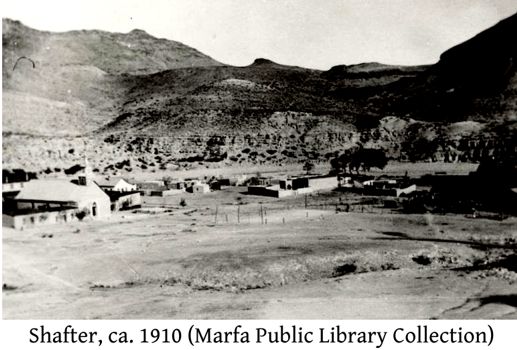
Ghost Town Wednesday: Shafter, The Silver Capital of Texas
 This area of Texas is home to just a handful of residents these days, but once boasted a population of four thousand. The town was named for Colonel (later General) William R. Shafter, commander at Fort Davis, and located about eighteen miles north of Presidio. It became a mining town after rancher John W. Spencer found silver ore there in September 1880.
Shafter had the sample assayed and found it contained enough silver to make it profitable to mine – profitable enough for Shafter himself to invest. Spencer had thought it prudent to share his secret with Shafter since the area was prone to periodic Indian attacks. Protection would be needed to carry out successful mining operations.
 Shafter called upon two of his military associates, Lieutenants John L. Bullis and Louis Wilhelmi to join his venture (and clear the area of unfriendlies). The following month Shafter and his partners asked the state of Texas to sell them nine sections of school land in the Chinati Mountains. Eventually only four sections were purchased, but lacking capital the partners leased part of their acreage to a California mining group. Shafter later obtained financial backing in San Francisco and the Presidio Mining Company was organized in the summer of 1883.
The company contracted with Shafter, Wilhelmi and Spencer individually to purchase their interests, each receiving five thousand shares of stock and $1,600 cash. Bullis had purchased two sections in his wife’s name, but when the company’s manager William Noyes found deposits on the Bullis acreage (valued at $45 per ton), a dispute arose. Bullis claimed the two sections had been purchased outright by his wife with inherited funds and not part of the partnership. An injunction was filed to halt mining in that section until the spring of 1884 when operations resumed.
The town of Shafter, situated on Cibolo Creek at the east end of the Chinati Mountains, grew up around the mining operations and a post office was established in 1885, this despite the fact supplies and other resources were hard to come by given its remote location. After legal wrangling over the Bullis sections was concluded, Noyes hired around three hundred men.
Mexicans from both sides of the border, as well as African-Americans, were hired and paid well, and until the Alaska gold rush in 1897 California miners also worked the Presidio Mine. Just like mining towns across the West, miners lived in company housing, shopped at the company store and were treated by the company doctor.
By the turn of the century the town’s population was growing with two saloons, a dance hall, church and a school. A wood-cutting firm was contracted to provide fuel for the furnaces, but by 1910 the wood was exhausted and oil from Marfa was trucked in. Silver pockets were found at around seven hundred feet, some yielding as much as five hundred dollars per ton of ore. By 1913 mules had been replaced by a tram to haul the ore out.
Not long after the town was founded, Texas Rangers were called upon to handle sporadic violence. Then came 1914 – the Mexican Revolution and Pancho Villa – and cause for increased vigilance. Although the mine closed and reopened several times in the 1920’s and 1930’s and the Presidio Mining Company sold out to the American Metal Company in 1928, operations continued unchanged. However, in the throes of the Great Depression, silver prices in 1931 had dropped to twenty-five cents an ounce.
At one time the town’s population had grown to four thousand and employed five hundred miners, but by the early 1930’s had fallen to around three hundred. President Roosevelt’s economic initiatives had brought about some relief, but the mine closed again in 1942. In 1943, no longer strictly a mining town, Shafter had a population of fifteen hundred. Two nearby military bases, the Marfa Army Air Field and Fort D.A. Russell, were served by the twelve remaining businesses.
When the military bases closed following the end of World War II, the town rapidly declined to less than one hundred residents. In 1954 the Anaconda Lead and Silver Company sent surveyors and prospectors, raising the hopes of locals that mining operations at some level would resume. However, Anaconda left and never return despite finding deposits of high grade lead and silver.
Other attempts to revive and sustain mining operations have been made over the years, the most recent when Aurcana Corporation acquired the Shafter mine in 2008. The company spent a considerable amount of money on equipment and hiring, but by 2013 had scaled back considerably and by year’s end had notified 170 employees of a “permanent layoff”.1
Between 1883 and 1942 the mines yielded 30,290,556 troy ounces of silver, 8,389,526 pounds of lead, and 5,981 troy ounces of gold. With severe water shortages in the region, it seems unlikely the mines could ever again be profitably and responsibly operated. The few remaining residents of the area are served by the Marfa school district about thirty-five miles away. The Cibolo Creek Ranch, located between Marfa and Shafter, was where Supreme Court Justice Antonin Scalia recently died.
If you’d like to see pictures of the area and what remains of the town, maps and various other historic memorabilia, go to Portal to Texas History and type “Shafter” in the search box. Other sources for this article include: Texas State Historical Association and Ghost Towns of the West, by Lambert Florin, 1973, pp. 667-671. Other articles here at Digging History about this area include: Ghost Town Wednesday: Glenn Springs, Texas and two Tombstone Tuesday articles about a bit of Texas history relating to the Pancho Villa era here and here.
 Did you enjoy this article? Yes? Check out Digging History Magazine. Since January 2018 new articles are published in a digital magazine (PDF) available by individual issue purchase or subscription (with three options). Most issues run between 70-85 pages, filled with articles of interest to history-lovers and genealogists — it’s all history, right? 🙂 No ads — just carefully-researched, well-written stories, complete with footnotes and sources.
Want to know more or try out a free issue? You can download either (or both) of the January-February 2019 and March-April 2019 issues here: https://digging-history.com/free-samples/
Thanks for stopping by!
Far-Out Friday: Death By Pimple

I ran across this intriguing subject while researching an early Surname Saturday article about the Pimple surname. I found several references to so-called “death by pimple” and researched further. Clearly, the problem was due to lack of an effective way to treat infection prior to the late 1920’s and early 1930’s.
That’s not to say doctors didn’t try to treat infections. There were advertisements galore during the nineteenth century hailing various “miracle cures” for all sorts of maladies, pimples included. The first instance found in a search of “pimple” at Newspapers.com yielded an article about a suspect in the disappearance of a surgeon who “hath been set upon by some ill people.”
This article will be included in the March-April 2020 issue of our digital publication — Digging History Magazine. The magazine article, entitled “Ways to Go in Days of Old”, will explore the numerous (and sometimes tragic) ways our ancestors met their demise.
Since January 2018 new articles are published in a digital magazine (PDF) available by individual issue purchase or subscription (with three options). Most issues run between 70-85 pages, filled with articles of interest to history-lovers and genealogists — it’s all history, right? 🙂 No ads, just carefully-researched stories, complete with footnotes and sources.
Want to know more or try out a free issue (or two)? Go to the free sample page and download either or both of January-February 2019 or March-April 2019 issues. Totally free for you to enjoy and decide whether you’d like to become a magazine subscriber.
Thanks for stopping by!
Military History Monday: Hello Girls of World War I
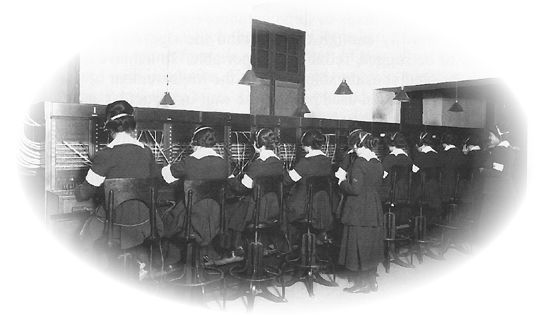 During World War I they were officially known as the Signal Corps Female Telephone Operators Unit, but more informally known as “Hello Girls”. The United States had been reluctant to join its European allies in the conflict, but when Germany began an all-out effort in early 1917 to sink American vessels in the North Atlantic, President Woodrow Wilson’s hand was forced. He asked Congress for a declaration of war, “a war to end all wars”. On April 6, 1917 Congress officially did so, engaging the Germans and hoping to make the world once again safe for democracy.
The British had been at war with German for nearly three years when the United States joined the effort. With their men away fighting the war, large numbers of women were working in munitions factories throughout Britain. Their work was dangerous as explosives and chemicals caused deaths. The greatest single loss occurred in early January 1917 when a munitions factory in Silvertown, England exploded due to an accidental fire – seventy-two women were severely injured and sixty-nine perished.

This article is no longer available for free at this site. It was re-written and enhanced, complete with footnotes and sources and has been published in the November 2018 issue of Digging History Magazine. This particular issues featured articles about World War I, including how to find genealogical records. Should you prefer to purchase the article only, contact me for more information.
I invite you to check out Digging History Magazine. Since January 2018 new articles are published in a digital magazine (PDF) available by individual issue purchase or subscription (with three options). Most issues run between 70-85 pages, filled with articles of interest to history-lovers and genealogists — it’s all history, right? 🙂 No ads — just carefully-researched, well-written stories, complete with footnotes and sources.
Want to know more or try out a free issue? You can download either (or both) of the January-February 2019 and March-April 2019 issues here: https://digging-history.com/free-samples/
Thanks for stopping by!
Feisty Females: Sara Payson Willis, aka Fanny Fern
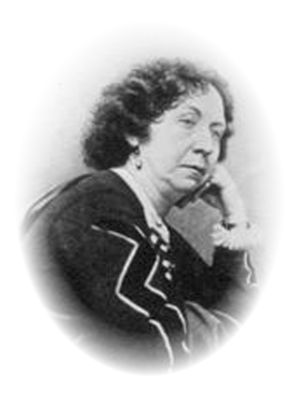 March is Women’s History Month and what better way to kick it off than to highlight the accomplishments of first female newspaper columnist and highest paid nineteenth century newspaper writer Sara Payson Willis, a.k.a. “Fanny Fern”.
Sara was born in Portland, Maine on July 9, 1811, the daughter of Nathaniel and Hannah (Parker) Willis. Her parents had planned to name their fifth child after Reverend Edward Payson, pastor of Portland’s Second Congregational Church (five years later they named a son after the reverend). Instead, she was given the middle name of Payson.
Six weeks following her birth Nathaniel moved his family to Boston where he founded the first religious newspaper published in the United States, The Puritan Recorder. As a deacon at Park Street Church and a strict Calvinist, Nathaniel frowned on dancing and other ungodly pursuits and worried about the soul of his free-spirited daughter Sara. Hannah, however, was the polar opposite of her husband and the parent Sara most identified with.
Her older brother Nathaniel Parker Willis experienced his own religious conversion at the age of fifteen, but after his rising success as a poet resulted in his being excommunicated from the Congregational Church, the elder Willis was more determined to see Sara embrace his faith as her own, sending her to Catherine Beecher’s Female Seminary in Hartford, Connecticut.
Sara, however, had no intention of conforming to her father’s strict faith. Years later Catherine Beecher would tell Sara she remembered her as the worst behaved child in the school – and the best loved! Harriet Beecher Stowe, a pupil-teacher at her sister’s school, remembered Sara as a “bright, laughing witch of a half saint half sinner.”2
While Sara struggled with arithmetic, she excelled in writing. Her compositions, full of satire and clever wordplay, were sought after by the editor of the local newspaper. After returning to Boston in 1830 or 1831 she edited and wrote articles for her father’s publications, The Recorder and The Youth’s Companion, without remuneration and not a thought of someday making a career of her talents as a writer.
In 1837 Sara married Charles Harrington Eldredge and together they had three daughters: Mary (1838); Grace (1841) and Ellen (1844). The first seven years of their marriage were happy and fulfilling until a series of tragedies changed the trajectory of Sara’s life forever. In February of 1844 her sister Ellen died from complications of childbirth. When Hannah died six weeks following Ellen’s death it created a life-long void for Sara. Sara had always had a special bond with Hannah, they being of similar temperaments.
One year later and six months following her youngest daughter Ellen’s birth, Mary died of brain fever. Still more tragedy awaited Sara as Charles contracted typhoid fever and passed away in 1846. Charles had been involved in a lawsuit (which he lost) and after all accounts were settled, Sara found herself destitute without means to support herself and her two remaining daughters.
Nathaniel Willis provided a small portion of Sara’s support following Charles’ death, although he resented his son-in-law having been such a poor steward of his finances. The Eldredge family blamed their daughter-in-law, yet also reluctantly agreed to provide some support as well. Still, Nathaniel (who had soon remarried himself following Hannah’s death) urged his daughter to remarry.
Sara capitulated and entered into an admittedly loveless marriage with Samuel P. Farrington, a widower, on January 15, 1849. Not surprising, it turned out to be a terrible mistake as Farrington relentlessly criticized her for just about everything – from her appearance to her friends to the memory of Charles. Although she tried to be a good parent to his children, Farrington used them to spy on their stepmother.
In January 1851 Sara reached her breaking point, and to the consternation of her family, contacted a lawyer and moved into a hotel with Grace and Ellen. Farrington publicly disparaged her, left Boston and later obtained a divorce in Chicago claiming desertion by his wife. Nathaniel was none too happy with the turn of events and refused to resume support.
Sara struggled for several months, working jobs too menial to allow her to put food on the table and adequately provide for her children. Grace was sent to live with her Eldredge grandparents while Ellen remained with her mother, both barely subsisting on bread and milk. In November of 1851 Sara decided to try her hand at writing again and published her first article in the Olive Branch, a new Boston newspaper. The article, entitled “The Governess” was soon followed up by short satirical articles in other publications under the pen name of “Fanny Fern”.
She sent articles to her brother Nathaniel, by then a magazine publisher. He turned her down, believing her irreverent writings to have little appeal outside of Boston. Nathaniel couldn’t have been more wrong as newspapers and periodicals began carrying the witty and irreverent columns of Fanny Fern. By the summer of 1852 she had been hired by publisher Oliver Dyer, becoming the first woman to have a regular column in a newspaper and doubling her previous salary. Little did Dyer know that one of his editors was Sara’s brother Richard, a musician and journalist who wrote the melody for It Came Upon a Midnight Clear.
Meanwhile, James Parton, Fanny Fern admirer and Nathaniel’s editor, had been clipping her articles and like other publications had been pirating them. Nathaniel demanded his editor stop clipping the articles but Parton refused and subsequently resigned.
Early in 1853 the publishing firm of Derby and Miller contacted Sara through her Fanny Fern column, offering to publish a book of her newspaper articles. She was offered the choice of payment by royalty of ten cents per book or one thousand dollars and an outright purchase of the copyright. Sara chose the royalty and was handsomely rewarded as the book, entitled Fern Leaves From Fanny’s Portfolio, sold seventy thousand copies in the United States in less than a year. Another twenty-nine thousand copies sold in England.
With a much improved financial outlook, Sara was able to take back Grace from the Eldredges and moved to New York. She secured a regular column in the New York Ledger at a salary of $100 per week, then the highest salary of any columnist, male or female, in the country. The column appeared each week until her death in 1872.
Under her pen name she began to write novels, first publishing Ruth Hall, a fictional work based on her own life story, in 1854. The book depicted her happy first marriage followed by poverty and included some less-than-flattering “payback” for her disparaging and disapproving relatives. After her actual name was publicized some critics expressed disdain for her scathing portrayal of family members. Nathaniel Hawthorne, however, wasn’t among her critics – rather, he quite enjoyed her style of writing.
Nevertheless, Sara took note of the criticism and set a different tone in her second autobiographical novel, Rose Clark. Never shy about her opinions nor immune to controversy, Fanny Fern defended Walt Whitman’s controversial work, Leaves of Grass, in May of 1856. She had this to say about herself, her critics and the city she left behind:
And here by the rood, comes Fanny Fern! Fanny is a woman. For that she is not to blame; tho’ since she first found it out, she has not ceased to deplore it. She might be prettier, she might be younger. She might be older and she might be uglier. She might be better and she might be worse. She has been both over-praised and over-abused, and those who have abused her worst have imitated and copied her most. One thing may be said in favor of Fanny: She was not, thank Providence, born in the beautiful, backbiting sanctimonious, slandering, clean, contumelious, pharasaical, phiddle-de-dee, peck-measure city – of Boston.3
At the age of forty-five Sara married her long-time admirer James Parton, living in New York City and later raising her granddaughter Ethel following Grace’s death in 1862. In 1859 she purchased a Manhattan brownstone as she continued to write for the Ledger. As a long-time supporter of the women’s suffrage movement, Sara co-founded Sorosis, following criticism directed at New York City’s all-male Press Club. Sorosis was America’s first professional club for women.
Sara Payson Willis died on October 10, 1872 following a six-year battle with cancer. Her close friends never knew she was ill until near the end of her life. After losing the use of her right hand she began writing her weekly column with the left. When that became impossible she dictated her column to Ellen or James, never missing a single column until the last one was published two days after her death.
She bucked the conventional Victorian ideas of how a lady was expected to conduct herself. Despite criticism of her unconventional and sometimes-coarse personality and writing style, her success as a writer proved that women could indeed make it in a man’s world. Sara knew that if a woman could achieve financial independence it was entirely possible that someday all women would achieve full and equal rights. How right she was.
Did you enjoy this article? Yes? Check out Digging History Magazine. Since January 2018 new articles are published in a digital magazine (PDF) available by individual issue purchase or subscription (with three options). Most issues run between 70-85 pages, filled with articles of interest to history-lovers and genealogists — it’s all history, right? 🙂 No ads — just carefully-researched, well-written stories, complete with footnotes and sources.
Want to know more or try out a free issue? You can download either (or both) of the January-February 2019 and March-April 2019 issues here: https://digging-history.com/free-samples/
Thanks for stopping by!
Tombstone Tuesday: Zilpha Etta Scott Dockery (1796-1903)
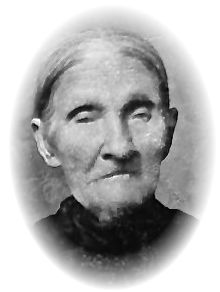 She was born on September 8, 1796 in Virginia and moved with her family to Spartanburg, South Carolina at the age of three, an event she remembered vividly in 1902 when interviewed by the Dallas Morning News. John Scott was a farmer and the father of three sons and eight daughters.
While most of her family appears to have died young, Zilpha would more than outlive all of them, her life spanning three centuries. When she was born George Washington was serving his second term as the first president of the United States. Although Napoleon Bonaparte had just married Josephine his rise to power had not yet evolved.
“My people were hard-working people,” she declared. “We worked in the fields with plows drawn by oxen and made crops that way for my father the year before I was married.”4 Her childhood dresses were made of flax cloth, although she fondly remembered the first calico dress she made.
“Calico was so skeerce and expensive we couldn’t afford any flounces and frills and trains them days.” Instead, Zilpha wove flax cloth and traded it yard for yard for calico. It was “purty”, she remembered in 1902, and she herself was “naturly purty”. In those days folks didn’t wear their shoes on the way to church, corn shuckings, logrollings, weddings or fairs. They would walk barefoot until reaching their destination, put their shoes on and take them off again before walking home.
Zilpha married William Hiram Dockery in 1818, with whom she had nine children – six sons and three daughters. From Spartanburg, they moved and settled among the Cherokee Indians in Alabama. At that time the Cherokee lived much like the white man, very rich and owning Negro slaves. That would change as more white settlers arrived and gradually forced the Indians to relinquish their land.
William was hired by the government to transport the Cherokees from Alabama to Texas and the Indian Territory. She remembered a great many of them committed suicide rather than leave their beloved land. During the trek William contracted swamp fever and died soon after returning in 1846 or 1847. In 1856 she married John Diffy, a veteran of the War of 1812 and a personal friend of General (and later President) Andrew “Old Hickory” Jackson. John died about a year later and Zilpha changed her name back to Dockery.
Zilpha, or “Grandma Ziff” as she was known to her family, was a great cook and baker who made her pin money selling gingercake and cider. People would come from miles around when she cooked for weddings, fairs, cotton pickings, corn shuckings, logrollings, quiltings – until she was 100 years old, any event where folks congregated en masse. During the Civil War she was also on hand for muster days to cook “a good square meal”. “And, my Columbus, how they did eat!”, she exclaimed.
In the 1890’s she moved with her descendants to Lamar County, Texas. In 1902 the reporter who interviewed Zilpha surmised that her longevity may have been due to a “primitive mode of living”. C.W. Driskell, her son-in-law offered her a comfortable home upon arriving in Texas, yet she preferred living the primitive style she had always known. The reporter shivered while Zilpha paid absolutely no mind as the wind blew through the cracks – and summer was still better suited for bare feet than shoes!
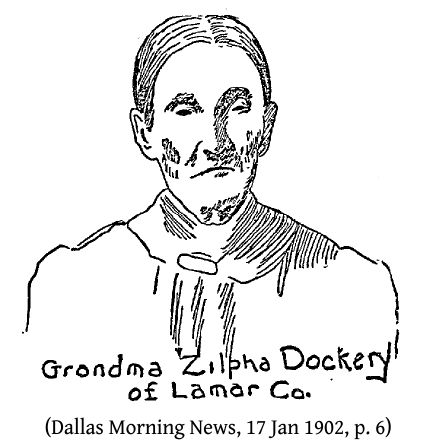
One of the most amazing things occurred after Zilpha reached the century mark. She had never attended a day of school in her life, yet at the age of one hundred years she decided to teach herself the alphabet and learned to read. In 1902 at the age of 105 her memory was still remarkably sharp, although she had begun to slow down a bit and was losing her eyesight and occasionally experiencing “drunk and swimming spells”.
Her taste in clothing remained “old-fashioned” as she continued to knit her own stockings and gloves. Zilpha enjoyed traveling and would spend a great deal of time visiting her family scattered across north Texas. During her life she had never been seriously ill, took salts once in awhile for her stomach, and maybe a nip of brandy now and then (even as a staunch Baptist!). She was still using snuff but had given up smoking just a short time before the interview – the “drunk and swimming spells” to blame. The reporter noted she still hadn’t quite yet kicked the habit – reaching over to borrow C.W.’s cigar, she enjoyed a few satisfying puffs.
Her vivaciousness and zest for life was evident as she answered questions about her past and shared stories from days gone by. When asked if she believed in witches Zilpha told a story about her cows once beginning to give bloody milk that smelled bad. An old neighbor lady shared a remedy to determine if a cow had been witched.
She put the milk in a pot on the fire and whipped the milk out into the fire with a bundle of willow switches while it was boiling. According to the old lady, whoever withced the cows was supposed to walk through the door. Zilpha sent all of her children out of the room and while whipping the milk in walked none other than her sister-in-law Bessie Gilbert. Bessie asked, “Zilph, what in the devil are you doing there?”. Zilpha replied, “Well, the devil has come.” She never would say whether she believed in witches, however.
Oh, and she was opinionated! As a devout Baptist she had walked a half mile or more to preaching for years, although in the early twentieth century she “had no patience with the common run of preachers of these days”. In her day they preached from Bible “without any put on and show to plain, sensible people, many of whom attended in their shirtsleeves, barefooted, in log cabins and under trees.” The preacher himself might be in shirtsleeves – and back in his own field the next day to make a living rather than charge for his preaching. In her opinion, the preachers of 1902 were all for the “almighty dollar”.
The Victorian style of dress was on its way out and Grandma Ziff had “plumb contempt” for that sad state of affairs as well. Her reasoning: the girls of that day were so foolish and uglier than in her day. Thus, it took more fine dressing to make themselves look as purty as she had been in her youth. Grandma Ziff was definitely one-of-a-kind and plenty feisty.
A year after the interview Zilpha Dockery took ill one day, became unconscious and died on January 14, 1903 at the age of 106. She was buried in the Shady Grove Cemetery in Pattonville, Lamar County, Texas. Inexplicably, newspapers outside of Texas reported her as a “colored woman”. If you’d like to read more about Zilpha, see the Find-A-Grave entry here.
Did you enjoy this article? Yes? Check out Digging History Magazine. Since January 2018 new articles are published in a digital magazine (PDF) available by individual issue purchase or subscription (with three options). Most issues run between 70-85 pages, filled with articles of interest to history-lovers and genealogists — it’s all history, right? 🙂 No ads — just carefully-researched, well-written stories, complete with footnotes and sources.
Want to know more or try out a free issue? You can download either (or both) of the January-February 2019 and March-April 2019 issues here: https://digging-history.com/free-samples/
Thanks for stopping by!
Feisty Females: Sarah Jane Ames
If ever a person of the fairer sex could be called a “renaissance woman” it may have been Sarah Jane Ames. When Sarah died in 1926 she was hailed as one of Boone County, Illinois’s “most virile, energetic, and withal most interesting citizens”.
She was born Sarah Jane Hannah in Montreal, Canada on December 4, 1843, and in 1854 migrated to Belvedere, Illinois with her parents (Thomas and Jane) and two brothers. Save for a few years she later spent pioneering in South Dakota, Sarah remained in Boone County the remainder of her life.
Did you enjoy this article snippet? This article has been updated with new research and published in the November-December 2019 issue of Digging History Magazine. The magazine is on sale in the Digging History Magazine store and features these stories:
- The Burr Conspiracy: Treason or Prologue to War
- Finding War of 1812 Records (and the stories behind them)
- Sarah Connelly, I Feel Your Pain (Adventures in Research: 1812 Pension Records)
- Essential Skills for Genealogical Research: Noticing Notices
- Bullets, Battles and Bands: The Role of Music in War
- Feisty Female Sheriffs: Who Was First?
- The Dash: Bigger Family: (A Bigger and Better Story)
- Book reviews, research tips and more
Since January 2018 new articles are published in a digital magazine (PDF) available by individual issue purchase or subscription (with three options). Most issues run between 85-100+ pages, filled with articles of interest to history-lovers and genealogists — it’s all history, right? 🙂 No ads — just carefully-researched, well-written stories, complete with footnotes and sources.
Want to know more or try out a free issue? You can download either (or both) of the January-February 2019 and March-April 2019 issues here: https://digging-history.com/free-samples/
Thanks for stopping by!
Ghost Town Wednesday: Lone Star, Texas
This ghost town in northeast Cherokee County was first known as “Skin Tight”. According to legend the community got that name after cattle buyer and merchant Henry L. Reeves opened a store. It’s believed the name was due either to Reeves’ “close trading tactics” or perhaps because he worked as a trapper and animal skinner.
The town had begun to take shape in several years earlier in 1849 when Hundle Wiggins settled there after the Texas Legislature created Cherokee County in 1846. Reeves built a store there in the early 1880’s and on June 13, 1883 a post office was established under the name “Lone Star”. Not long afterwards Reeves moved to Smith County and was shot to death in Troup on June 13, 1886.
By 1885 Lone Star had grown to a population of 160 with a cotton gin, gristmill, sawmill, general store and school. The town was somewhat isolated but the town continued to grow steadily. Both Woodmen of the World and the Masons established chapters in the small community.
By 1890 there were three mercantile stores and a millinery shop in the business district. In 1893 a fire swept through the business section of town and destroyed all but two buildings. The fire started in the offices of Dr. J.E. Rowbarts, who died in the fire. No one was ever able to determine the exact cause although it was common knowledge the doctor kept a cannister of black powder in his office.
The town was rebuilt quickly and resumed its growth, reaching a population of three hundred by the mid 1890’s, aided in part by the Lone Star Institute established by Colonel T.A. Cocke and Reverend M.A. Stewart in 1889. The school’s reputation for excellence led many families to settle in Lone Star and remain after their children had graduated.
Lone Star had four churches – Universalist, Methodist, Baptist and Church of Christ – along with three saloons. One of those was closed following the Blizzard of 1898 when its beer stock stored in the cellar froze and burst.
Lone Star’s decline began at the turn of the century, especially after the Texas and New Orleans Railroad bypassed it in 1903. Instead, the railroad was built through nearby Ponta, where many merchants and residents moved. In 1915 the population was two hundred and the post office closed the following year.
Even after oil was discovered nearby in 1939 the town failed to revive since the field never produced much. The Lone Star Oil Field produced 878,051 barrels and the Lone Star Pettit Field just over 6,000 barrels before both sites were shut down in 1960. A few businesses were still hanging on in 1940 but after World War II even more residents chose to leave.

In April of 1986 Lone Star was designated as a historical site. By the 1990’s only an old weather-beaten blacksmith shop remained. Not a whole lot has been written about Lone Star and except for the historic marker most people wouldn’t even know a town ever existed there. At the dedication ceremony in 1986, John Mark Lester spoke about the “Saga of Lone Star”:
The people who settled Lone Star never were able to build a lasting town for themselves and their descendants, but old Lone Star is not forgotten when the history of Cherokee County is told. There are numerous stories and incidents that have not been told her this afternoon such as the story of Sam Asbury Lindsay, Jr. who came to Lone Star in 1900 and was so impressed with the telephone system that he went on to found what is the $221 million United Telecom Company. The Town’s star rose, glowed brightly for a time, dimmed, died, and never could be rekindled. The crumbling old blacksmith shop, the abandoned old cemetery, a few old homes and business building foundations lost in the weeds are the mute evidence that a town once was on this site. Lone Star lives in our memories and now in our history.5
Did you enjoy this article? Yes? Check out Digging History Magazine. Since January 2018 new articles are published in a digital magazine (PDF) available by individual issue purchase or subscription (with three options). Most issues run between 70-85 pages, filled with articles of interest to history-lovers and genealogists — it’s all history, right? 🙂 No ads — just carefully-researched, well-written stories, complete with footnotes and sources.
Want to know more or try out a free issue? You can download either (or both) of the January-February 2019 and March-April 2019 issues here: https://digging-history.com/free-samples/
Thanks for stopping by!