

In June of 1932 a column appeared in newspapers across the country, entitled “Questions and Answers from Washington”. Apparently it was a chance for everyday citizens to ask a burning question which was answered by someone in Washington, D.C. The questions ranged from “How is Italian salami made?” To “Can fleas be trained?” – and everything in between.
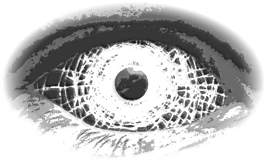
One question posed was “Can a glass eye explode?”. The answer: “A glass or porcelain eye might explode due to some chemical change in the material used, but the recorded occurrences are extremely rare.”1 Hmm . . . tell that to Frank R. Minner, an Allentown, Pennsylvania building inspector whose glass eye exploded, “with a report like a pistol shot.”2
Very few who knew Minner were aware he even had a glass eye after losing his left eye in a building accident twenty years before the freakish accident in 1911. The man who was receiving a building permit was shocked to observe Minner remove his hand from the eye and see him bleeding profusely. Minner was in shock and fainted.
Dr. Eugene M. Kistler had no idea what caused the glass eye to explode, nor could the original optician. Minner remained in shock but was expected to recover unless tiny splinters of glass had been blown back into his brain. Allentown doctors and scientists were truly baffled as to what caused the exploding glass eye.
This wasn’t the first time, nor the last, an exploding glass eye made headlines. According to a column3 by Dr. Van Dellen, glass eyes were first produced in the sixteenth century, although some believe the practice dates back to the fifth century B.C. when Egyptians crafted ocular prostheses called Ectblepharons.4 These were made from painted clay or enameled metal, attached to a piece of cloth and worn outside the socket. Ambroise Parê, a French surgeon, is most often credited as the father of artificial eye design in the sixteenth century. The first ones weren’t particularly comfortable to wear, however, causing the eyelid to protrude.
The term “glass eye” was mentioned in a 1743 British weekly newspaper, advertising the services of surgeon Joseph Baker who claimed adeptness at his profession: “He likewise infallibly cures deafness, takes out teeth with a touch, and puts in ivory teeth, also artificial glass eyes, so as not to be discernable.”5 In the mid-1800s German glass artisans developed a technique for making the artificial prostheses and German immigrant ocularists are credited with bringing them to America. American ocularists continued to make their own, but the material (kryolite) was imported from Germany.6
One story surfaced during the Civil War of a soldier with a glass eye who had enlisted and was discharged twelve different times. He was referred to as a “bounty jumper” because he would repeatedly enlist, pass the physical, get his bounty and then convince the camp doctor he should be discharged due to defective vision. This occurred repeatedly, but when Everett Babett attempted it a thirteenth time that proved to be the unlucky one apparently. Denied a discharge, he deserted, was captured and sentenced to be shot, although one source reported his sentence was commuted and he would be banished to the Dry Tortugas (Florida) for three years.7
In 1869 glass eyes were made of enamel, a type of glass, designed to last, at the most, only a year.8 In late 1869 it was reported that six hundred men were employed in the manufacture of glass eyes in America, not surprising since many soldiers lost eyes during the Civil War.9
I love browsing through nineteenth century newspaper archives. You never know what stories and headlines will pop up. Much like, “Saved by Her Corset” or “Killed by Her Corset” and “Saved by His Collar” or “Killed by His Collar” (look for those stories in future articles), stories about glass eyes began to appear in the 1870s:
- A gentleman from the East experienced something unusual in November of 1872 while visiting Wichita, Kansas. A gust of wind blew his glass eye right out of his head! “He wants to know if we have a blind asylum in Kansas, and if that zephyr was unusually heavy for this latitude.”10
- “A singular story of coincidences”: In 1873 Boston police were searching for a man by the name of W.H. Johnson who reportedly had a glass eye. They found a W.H. Johnson in Bangor, Maine with a glass eye, but he was the wrong man. Another man, totally innocent, with the same name and a glass eye was located in Salem, Massachusetts. A telegram reported that a W.H. Johnson with a glass eye was arrested in Newburyport, Massachusetts, and “he likewise proved to be the wrong customer.” Authorities were baffled, knowing that somewhere out there was a fourth W.H. Johnson with a glass eye, “that is, unless he happens to be the wrong W.H. Johnson with a glass eye.”11
Of course, men weren’t the only ones to utilize glass eyes, but one man in Rochester, New York was unnerved to the point of seeking a divorce over his wife’s glass eye which was inflicting “unendurable torments upon him.” His specific complaint was the fact his wife slept with her glass eye wide open at night. The New York Times sympathized, albeit tongue-in-cheek, with him:
At first sight this may seem a trivial matter, but a little reflection will lead us to deeply sympathize with the aggrieved husband. It is not unpleasant for a man to return home from a political meeting at 2 o’clock in the morning, knowing that however softly he may remove his innumerable boots, or however skillfully he may avoid tumbling over the chairs on which he had deposited his hats, the sleepless glass eye of his wife will gleam in the light of the two bedroom candles, and follow his wandering movements with a pitiless glare. The most sober of men cannot awake in the stillness of the night and feel quite at ease when he finds a glass eye watching him as sternly as though its owner knew all about his rash bet on the election of Mr. Tilden, and was waiting to explain how a man who had refused to buy a new parlor carpet could justifiably throw away his money in gambling.12
The man had tried everything he could think of to keep his wife’s eye closed, but to no avail. While expressing a sort of mocking sympathy, the Times hoped that he would lose his suit since it would cause the courts to be overwhelmed with others seeking divorces for similar reasons. They surmised that a court could grant a separation for a wife who found out her husband wore false teeth or a divorce over a wooden leg.
Clearly, the Times had a little fun with that story.
Women may have been a bit self-conscious, however, about wearing a glass eye. A “street-car mystery” was reported by the Detroit Free Press in 1877. Four women and a man were riding together when one of the women sneezed. The man discovered a glass eye under a parcel and asked “who sneezed her glass eye out?” The women turned either red or pale and cast sly glances. One by one each of the women denied having sneezed out her glass eye and exited the trolley, leaving the man to wonder why the woman hadn’t claimed it.13
Several hundred glass eyes were reported to have been sold annually, and eventually animals would be fitted with the artificial prostheses, the demand for them “much larger than most people would imagine.” While dogs and horses were most frequently fitted with glass eyes, the result of accident or disease, cats might also be candidates.14
Glass Eyes. Their Manufacture, Sale and Ruse
By the 1880s the operation for replacing a natural eye with a glass one enabled skilled surgeons to fit the glass eye on a stump following amputation of parts of the eye, allowing the glass eye to move naturally, and presumably appear less “creepy.” Clearly, some people were self-conscious, disguising the fact they were wearing one by utilizing a glass eye for daylight hours with a small pupil and one for night with a larger pupil “to offset the dilation”.15
Suffice it to say that glass eyes were becoming more common as articles mentioning them abounded in newspapers across the country. A story might mention someone’s glass eye shattering as the result of it falling out or being knocked out, but never until the early twentieth century did the headline “Glass Eye Explodes” begin to appear. It did seem rather curious and comical in some instances.
One of the first articles appeared in 1910 when, coincidentally, a man was walking up stairs for an appointment to visit his eye specialist. It just suddenly burst with a “loud report” with, quite fortunately, no injuries reported.16 For a period of several years, these types of headlines would appear with all-too-similar stories:
HIS GLASS EYE EXPLODES.
A man in Austin, Texas experienced the “most peculiar accident on record” when Arthur Nichols’ left glass eye exploded while he was sitting at the supper table in early 1914. Slivers of glass were embedded in his face and an oculist removed them. As it turned out, Nichols had not one glass eye but two for he was totally blind.17
GLASS EYE EXPLODES WHILE FARMER READS.
M.C. Canterberry, a Huntingon, West Virginia farmer, escaped without a scratch when his glass eye exploded while reading the morning newspaper. With his good eye he had espied an article of interest, and leaning forward to get a better look, the artificial eye exploded and fell onto the paper. He described it as similar in nature to an electric light bulb bursting, albeit on a smaller scale. One doctor believed it may have been caused by a muscular contraction. Canterberry had heard of hogs blowing up after eating dynamite or men injured by exploding golf balls and doubted the veracity of those stories – now he said he would believe anything!18
GLASS EYE EXPLODES AFTER YEARS WEAR.
In Boulder, Colorado a man was reclining on the courthouse square when his glass eye suddenly exploded. Fortunately, the glass eye exploded outward and he only suffered minor cuts. An eye specialist believed a small amount of celluloid in the glass eye and the heat from his body caused it to explode.19
HIS GLASS EYE EXPLODES.
While the nation was on pins and needles awaiting news of whether Woodrow Wilson had been re-elected, a New Jersey man was watching an automobile go by when his glass eye suddenly exploded. An elaborate theory held that “a sunray from the automobile wind shield, or perhaps the headlight reflection, created a penetrating flash which generated enough heat to cause the explosion.”20
HIS GLASS EYE EXPLODES WHEN HE LOOKS AT A PIE
Farmer is Made Unconscious by Miniature Blast as He Eats in Restaurant.
An Indiana farmer had days earlier received a glass eye after losing his natural one as a result of a dynamite explosion. “Just as he was gazing with interest yesterday at a piece of pie, F.K. Cosgrove’s glass eye exploded and he fell from his chair to the floor in a restaurant. He was soon revived.”21
GLASS EYE “EXPLODES” WHEN HE GETS BAD NEWS.
Tony Sara of Freeport, Long Island had previously injured his eye with a screwdriver and had a glass eye inserted. In September of 1921 he received news that his brother had been struck while riding a bicycle and injured. Upon hearing the news, Tony’s glass eye exploded, apparently from internal stresses in the glass (or perhaps his own “internal stress”?).22
GLASS EYE EXPLODES
Indianan, Awakened By Report, Thought He Had Been Shot).
Cleve Willis was awakened one night by a sharp report and feeling blood stream down his cheek thought he’d been shot. His glass eye had shattered while he slept.23
GLASS EYE EXPLODES INJURING GOOD ONE
A Novel Accident Charged Against the Cold.
A Ranger, Texas man had stepped outside of a warm house during near freezing weather when his glass eye apparently exploded due to the sudden temperature change.24
It seemed more often than not the cause of exploding glass eyes was blamed on sudden temperature changes, although in 1931 a North Carolina man blamed his doctor and sued for $15,000 in damages and lost wages.25 The “glass eye explodes” stories began to taper off, however, in the 1940s.
World War II brought about difficulties in importing kryolite glass from Germany, and necessity being the mother of invention, scientists began developing other materials. The Department of the Navy began developing medical grade acrylic plastic for use in making artificial eyes. Technology gradually improved until today most ocular prostheses are made of acrylic.
Still, it’s curious that after years of widespread usage, those “Glass Eye Explodes” headlines started popping up around 1910. Things that make you go “hmm”.
 Thanks for stopping by! Please consider subscribing to Digging History Magazine. The current series features the history of individual states and how to find the best historical and genealogical records. Purchasing a subscription entitles you to subscriber benefits (20% off all services, including custom-designed family history charts) AND a chance to win your very own custom-designed family history chart! Details here (or click the ad below).

Footnotes:
- The Lincoln Star, June 24, 1932, accessed at www.newspapers.com on August 27, 2019, 19.
- Allentown Leader, May 27, 1911, accessed at www.newspapers.com on August 27, 2019, 1.
- Salt Lake Tribune, June 13, 1965, accessed at www.newspapers.com on August 27, 2019, 102.
- Dallas Eye Prosthetics, “A Brief History of Ocular Protheses”, accessed at https://dallaseye.net/ocular-prostheses-history/ on August 27, 2019.
- The Newcastle Weekly Courant (England), October 22, 1743, accessed at www.newspapers.com on August 27, 2019, 3.
- Dallas Eye Prosthetics.
- Hartford Courant, September 16, 1864, accessed at www.newspapers.com on August 28, 2019, 2.
- Tri-Weekly Examiner (Salisbury, North Carolina), August 23, 1869, , accessed at www.newspapers.com on August 28, 2019, 1.
- Detroit Free Press, November 29, 1869, accessed at www.newspapers.com on August 28, 2019, 3.
- Atchison Daily Patriot, November 19 1872, accessed at www.newspapers.com on August 29, 2019, 4.
- Chicago Daily Tribune, February 10, 1873, accessed at www.newspapers.com on August 29, 2019, 5.
- The New York Times, October 10, 1876, accessed at www.newspapers.com on August 29, 2019, 4.
- St. Louis Globe-Democrat, April 22, 1877, accessed at www.newspapers.com on August 29, 2019, 10.
- The San Francisco Call, February 21, 1893, accessed at www.newspapers.com on August 29, 2019, 8.
- Pittsburgh Daily Post, June 24, 1881, accessed at www.newspapers.com on August 29, 2019, 3.
- The Concord Times (Concord, North Carolina), May 9, 1910, accessed at www.newspapers.com on August 29, 2019, 1.
- The Indianapolis Star, February 16, 1914, accessed at www.newspapers.com on August 29, 2019, 5.
- Portsmouth Daily Times (Portsmouth, Ohio), April 16, 1914, accessed at www.newspapers.com on August 29, 2019, 8.
- The Charlotte News, August 11, 1914, accessed at www.newspapers.com on August 29, 2019, 10.
- Allentown Democrat, November 9, 1916, accessed at www.newspapers.com on August 29,
2019, 1. - Chicago Daily Tribune, December 8, 1916, accessed at www.newspapers.com on August 29, 2019, 17.
- New Castle News (New Castle, Pennsylvania), September 30, 1921, accessed at www.newspapers.com on August 29, 2019, 8.
- Cincinnati Enquirer, March 17, 1923, accessed at www.newspapers.com on August 29, 2019, 7.
- Marble Rock Journal (Marble Rock, Iowa), April 19, 1928, accessed at www.newspapers.com on August 29, 2019, 1.
- Reading Times (Reading, Pennsylvania), April 25, 1931, accessed at www.newspapers.com on August 29, 2019, 17.