
 As a genealogist and writer, I absolutely LOVE researching newspaper archives. I’m finding new resources for historic newspaper archives all the time, but my favorite sites include Newspapers.com, GenealogyBank and Newspaper Archive. I can’t tell you how many times I’ve come across some of the most unusual headlines. Sometimes, I’m inspired to do a little extra digging and write an article. This is one of those articles. Read on.

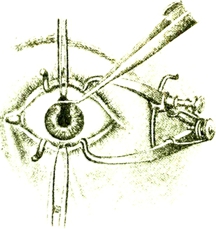 This intriguing headline appeared in The Sun (New York) on December 27, 1894, followed by an even more intriguing subtitle:
THE SUPPOSED IMAGE OF HER MURDERER SEEN IN THE RETINA 1
First of all, was this even possible? In the late nineteenth century the idea wasn’t as far-fetched as one might think. The possibilities had intrigued scientists for some time, especially since photography was invented in the 1840s, although amazingly the idea had been around since the 17th century when a Jesuit priest, Christoph Scheiner (also a physicist and astronomer), claimed to have noted an image on the retina of a frog he was dissecting. Was the faint image he observed perhaps the last thing the frog saw upon death? Nevertheless, the idea had been introduced and would eventually play a role in the evolution of photography.
It wasn’t much of a leap to realize the concepts of photography and the inner workings of the human eye were related. In May 1863 Mr. Warner, a London photographer, wrote a letter to the Photographic News (later reprinted in other newspapers) after reading an account of a young woman’s murder. He had immediately written a letter to the detective in charge of investigating the crime, informing him “that if the eye of a murdered person be photographed within a certain time after death, upon the retina will be found depicted the last thing that appeared before them, and that in the present case the features of the murderer would most probably be found thereon.”2
Warner was sure it was possible, since four years earlier (for reasons unclear) he had taken a photograph of the eye of a calf not long after its death. Upon placing the negative under a microscope he found what he believed to be an image, imprinted on the animal’s retina, of pavement lines on the slaughterhouse floor, which he assumed must have been the last scene
viewed by the animal prior to death. Unfortunately, the negative had since been broken and the pieces lost. With the permission of detective James F. Thompson he proceeded to share his photographic discovery with colleagues.
Warner considered “the subject is of too great importance and interest to be passed heedlessly by, because if the fact were known through the length and breadth of the land, it would, in my estimation, tend materially to decrease that most horrible of all crimes – murder.” Thompson agreed the possibilities were of the “greatest importance”. However, in the case of Emma Jackson’s murder it was “unavailing in this instance” since he had first seen her body forty hours after the crime and her eyes had already been closed. A post mortem examination had been made and she had already been buried earlier that week.
Thompson had been informed by an “eminent oculist some four years ago” that a decedent’s eyes must be photographed within twenty-four hours of death. Otherwise, whatever object might have been imprinted would have vanished “in the same manner as an undeveloped negative photograph exposed to light.”3 French journalists picked up the story which eventually made its way to the United States, at the time embroiled in the Civil War.
In September stories began appearing in United States newspapers about a reported attempt to solve a horrific crime near Evansville, Indiana by examining the retinas of a murdered German family.
Horrible Homicide! A Father and Three Children Murdered! 4
On August 29 a German man named Henry Herke and some of his children were brutally murdered. Herke’s wife, Louise, was away at the time, having gone to market earlier in the day. When she returned home around 11:00 a.m. a horrific, bloody scene awaited.
All victims had been brutally murdered – first reports indicating they had been struck by an axe, their heads nearly severed from their shoulders. Neither the cause nor the identity of the perpetrator(s) was known to authorities, although neighbors had observed two men exiting the home earlier that morning around daylight, headed toward a nearby swamp. The house had been ransacked.
The sheriff and several deputies, plus a group of citizens who formed a posse comitatus, were soon scouring the area in search of the murderers. The following day two soldiers were arrested at a nearby hospital, one named Crow and the other H.C. Roberts.
Justice was, of course, swifter in those days. A preliminary trial commenced on the morning of September 2. Louise Herke was the prosecution’s first witness. She had gone to market that day with her oldest son and left five children with Henry, one of them her niece. When she arrived home she found the gate open, although the house door was closed.
Upon entering the house her two youngest daughters ran to her and told Louise how two men had cut them with an axe.
I then discovered the oldest girl, daughter of my sister, lying on the floor in a pool of blood. I picked up the girl, who died in my arms; the boy lived till evening, but neither of them spoke. My little girl told me that two men, one big one and one little one, had come to the house; the little one stayed outside, and the big one went into the house and turned everything over. They then went out around the corner and returned. The big one staid [sic] outside, and the little one picked up the axe and “chopped them down.” I saw the axe on the porch. It was bloody and had hair on it. My little boy showed me the axe as the one he was killed with [apparently before he died]. . . My neighbor, Carl Hines, came by the fence, and discovered my husband’s body. I went and saw him, all bloody, and the axe by him on the fence.5
The newspaper account of the first day’s proceedings made special note of the defendants’ heights – Crow being about 5 feet, 4 inches tall and Roberts about 5 feet, 8 inches tall with a mustache. In addition, other details following their arrest certainly seemed to incriminate the two soldiers.
Tracks leading away from the house had been discovered and upon arresting the two the sheriff had taken them to the tracks and “found that the shoes fitted exactly in the prints; they were army shoes.”6 Additional tracks suggested the perpetrators had been running away, and in one track they found the imprint of three nails which corresponded with the nails in their shoes.
The following day a photographer named Joseph Adams testified that a photograph of Henry Herke had been taken by his father [unclear if Adams’ or Herke’s father] from which Adams produced a magnified picture. Adams claimed (and presented it as evidence) that it showed “the figure of a man in the eye of the victim. He testified:
The outlines are dim; moustache blacker and heavier from effects of chemicals used in magnifying; looks to me as much like one man as another; you can observe high cheek bones, a moustache; think the chin had no beard on; looks to me like a crazy, wild or drunken man; seems to me no sane man in a state of excitement could look that way; in my mind, picture should not convict any man, it is too indistinct; bears no resemblance to prisoner, Roberts, except the ears and high cheek bones.7
Despite Adams’ admission that the supposed image was too indistinct to serve as proof, and the favorable testimony of several witnesses for the defense, Crow and Roberts were bound over for trial. However, in late October the two were released, “the Grand Jury having failed to find bills against them.”8
Nevertheless, Joseph Adams had caused quite a stir and continued to investigate and experiment, although some thought his claims quite incredulous. Still, one noted member of the medical profession, Dr. J.P. DeBrueler, who was also a member of the medical faculty at the Medical College of Evansville, took a painstakingly close look for himself and saw a human face.
Subsequent newspaper accounts provided additional details of Adams’ experiment:
He had taken an ambrotype picture of the eye of the deceased, and then rubbing out everything but a single object apparently in the centre of the eye, this was placed under an ordinary magnifying glass. At the first glance the object appeared blurred and indistinct, but, getting the proper focus, the outlines of a human face were at once distinguishable. The image was apparently the face of a man with unusually prominent cheek bones, long nose, and rather broad forehead. A black moustache was plainly seen, and also the direction of the eyes, which seemed to be looking at some object sidewise. One of the eyes was as clearly seen as the eyes in a common ambrotype or fenotype.9
Perhaps dead men did tell tales. Still, it wasn’t C.S.I., Victorian-style. In the 1870s the idea was pursued once again by two German physiologists, Franz Christian Boll and Wilhelm Kühne. Boll discovered rhodopsin, a light-sensitive protein retinal receptor which facilitates absorption of green-blue light. He found the pigment in the rods of the retina and when exposed to light would “bleach”, yet could be restored in the dark even following death.
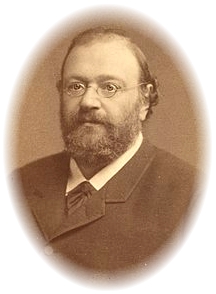 Kühne saw potential in Boll’s research and believed it “could be used to preserve images in the eye from the moment of death, as the images would remain etched into the pigment unless exposed to light.” If a process could be developed whereby the last retinal image could be preserved, then much like the image projected on a photographic plate, it could be analyzed.
The process was called optography and Kühne continued to pursue the possibilities of advancing forensic science by finding a way “to pry these last images from the eyes of the dead and develop them, just like a photograph.”10 He truly believed it possible to develop a method whereby heinous crimes could be solved using his research.
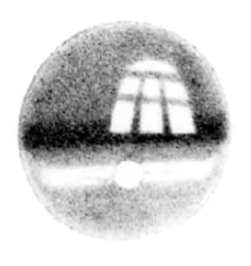 His first experiments were with animals – and, of course, the animal had to be killed, decapitated and its eyes removed, the quicker the better. His most promising result occurred in 1878 when the removal and dissection of a rabbit’s retina yielded an image of a barred window. Kühne had purposely turned the rabbit so it would be staring at the window. Further experimentation proved inconclusive and images were often indistinct and blurry. The goal, of course, was to produce an image from a human retina and Kühne got his chance when a man was executed by guillotine on November 16, 1880 for drowning his young children.
Following the decapitation Kühne was allowed to immediately retrieve the man’s left eye to begin dissection of the retina. While he observed what he thought to be the blade, his findings were later disputed – the man had been blindfolded at the time, so perhaps the last image was the steps leading to the executioner’s blade. Inconclusive results did not deter Kühne, nor other researchers.
Families and some members of law enforcement continued to hope it would somehow be able to solve violent crimes via optography, although more than a few medical experts cast aspersions. In early 1880 one Manchester, England doctor came forward immediately and threw cold water on a reported theory: “The theory expressed in this morning’s paper is quite erroneous. It is quite impossible to form any judgment from a photograph so taken.” Although complimentary of Kühne’s research, it had yet to be proven possible for a human retina to produce an image. Still, the doctor was hopeful more research would bring optography “to a much more perfect state.”11
The topic would come up from time to time over the years, although one wonders what was to be gained in the case of the Brown murders which occurred in September 1879 in West Winchester, Ontario. Clark Brown, the oldest son, had been found guilty of brutally murdering his father and sister. Clark Brown was hanged for the deed, but in January 1880 the bodies were exhumed so that photographs of their eyes might be taken to determine if someone else had committed the murders. The father’s eyes showed nothing and surmised that he had been killed in the dark. However, experts claimed to have observed images on the little girl’s retina.
Shockingly, the two objects were believed to be Clark and his mother. In late 1879 another witness had come forward who implicated the mother, alleging she had conspired with another woman to kill her husband. The plot thickened!
Authorities were hopeful of finding proof and arrested the mother, the supposition being Clark and his mother had killed the father and the little girl had seen the crime before she was killed. Clearly, “the whole case reads like one of Edgar Allen Poe’s romances of crime and mystery”, one newspaper opined.12
The topic came up yet again in conjunction with the infamous “Jack the Ripper” crimes after a British newspaper suggested the possibility of an incriminating image imprinted on the retina of victim Annie Chapman.
PHOTOGRAPHY AND THE WHITECHAPEL MURDERS
Commenting on the fact that Dr. Bagster Phillips, the police-surgeon who was called as a witness in reference to the murder of Annie Chapman, was asked as to the possibility of obtaining a clue to the murderer by photographing the eyes of the dead woman, and that he gave no hopes of any useful result, the Photographic News says – Although we may pretty confidently say that photographs of the eyes of the murdered woman would have been useless, there can be no doubt whatever that a series of photographs of the body and of the mutilations ought to have been taken, and in the face of these it would have been difficult to conceal essential facts. It is to be hoped that even now the camera will be brought into requisition, especially as there are several experienced anatomists who are also competent photographers.13
The possibility of solving crimes with optography came up more than once in ensuing years as references were woven into works of fiction. Rudyard Kipling inserted the idea of taking an optogram of a dead man’s eye “with a Kodak camera”14 in his short story entitled, “At the End of the Passage” (1891). Jules Verne and James Joyce would also utilize the concept in early twentieth century writings.
So prevalent was the lingering hope that one day someone might discover a way to extract an incriminating image from a victim’s retina, it became common practice in the late nineteenth and early twentieth centuries to photograph the eyes. Police weren’t taking any chances and perhaps criminals didn’t either, at least as long as the hope for breakthrough persisted.
In 1927 Constable P.C. Gutteridge was shot and killed in the East End of London. After discovering shots had been fired through each eye, Scotland Yard investigators wondered whether the murderer had done it out of superstition to ensure the man’s retina would not reveal incriminating evidence to police.
Thus, in 1894 the headline “In a Dead Woman’s Eye” wasn’t at all unusual. Jamestown photographer Fred Marsh took credit for the idea of examining Mrs. Shearman’s eyes. Subsequent reports indicated with the assistance of a powerful microscope “an apparently big man [was] presented, with bushy whiskers, and wearing a long overcoat. The trousers appear[ed] to be badly wrinkled.” Unfortunately, no distinct, identifiable features were observed – “no impression was discoverable”.15
Optography was eventually debunked as nothing more than pseudo-science at best, despite renewed attempts in 1975 to once again explore the possibilities. Today, it’s merely discussed as an obscure oddity.
 Thanks for stopping by! For more stories like this one, consider subscribing to Digging History Magazine. Purchasing a subscription entitles you to subscriber benefits (20% off all services, including custom-designed family history charts) AND a chance to win your very own custom-designed family history chart! Details here (or click the ad below).

Footnotes:
- The Sun (New York), December 27, 1894, accessed at www.newspapers.com on August 27, 2019, 7.
- The Leeds Intelligencer and Yorkshire General Advertiser, May 16, 1863, accessed at www.newspapers.com on August 27, 2019, 3.
- Ibid.
- The Evansville Daily Journal, August 31, 1863, accessed at www.newspapers.com on August 27, 2019, 3.
- The Evansville Daily Journal, September 2, 1863, accessed at www.newspapers.com on August 27, 2019, 3.
- Ibid.
- The Evansville Daily Journal, September 3, 1863, accessed at www.newspapers.com on August 27, 2019, 3.
- The Evansville Daily Journal, October 27, 1863, accessed at www.newspapers.com on August 27, 2019, 3.
- Fayetteville Semi-Weekly Observer (North Carolina), October 12, 1863, accessed at www.newspapers.com on August 27, 2019, 1.
- “Last Sights of the Dead: The Weird Science of Optography”, accessed at https://anynewsbd.com/last-sights-of.html on August 27, 2019.
- The Leeds Mercury, January 14, 1880, accessed at www.newspapers.com on August 27, 2019, 8.
- The Allentown Democrat, January 21, 1880, accessed at www.newspapers.com on August 27, 2019, 1.
- The Leeds Mercury, September 22, 1888, accessed at www.newspapers.com on August 27, 2019, 3.
- Rudyard Kipling, Life’s Handicap; being stories of mine own people (New York: Macmillan, 1897), 265.
- Greeley Graphic (Greeley, Kansas), December 28, 1894, accessed at www.newspapers.com on August 27, 2019, 7.