
Note: This article is part of a series of articles commemorating America’s 250th birthday. You might want to read this two-part article before reading this one for continuity: Part 1 and Part 2.

Just who were those men who gathered for debate in the Mecklenburg county courthouse in May of 1775? Was there something else contributing to the particularly fiery brand of radicalism in Mecklenburg County? In 1765 the Stamp Act imposed a tax on all printed materials throughout the colonies. It was an affront to free speech.
In North Carolina, Mecklenburg County in particular, paying taxes to the Anglican Church was an affront – their version of the onerous Stamp Act. The Marriage and Vestry Acts were particularly onerous to Presbyterian firebrand Alexander Craighead and his followers. It was illegal for marriages to be performed other than by ministers of the Anglican faith. If settlers
in the back woods of North Carolina wished to legally marry they needed to travel many miles to do so.
As Scott Syfert points out in his book,The First American Declaration of Independence?, if a woman was pregnant it might take months before she was able to travel to make the union legal. Meanwhile, the child would be born out of wedlock. In 1769 Presbyterians of Mecklenburg County had sent a petition directly to William Tryon, Governor of North Carolina. Their petition for redress was filed on behalf of approximately one thousand freemen of the church of Scotland.
Petitioners pointed out the King had expressly “instructed the Lords Proprietors to grant other and greater religious privileges to dissenters.”1 Scottish Presbyterians known as Covenanters had been persecuted by the Church of England following the rise of what was considered to be a rather radical movement, led by Richard Cameron.
In June of 1680 Cameron and his followers (“Cameronians”) sought independence from the English, proclaiming them enemies of Christ and His covenants.
Their “revolution” was rather short-lived and resulted in the death of Cameron, his head and hands lopped off and presented to the authorities. Most of the 1680s were known as the “Killing Time” in Scotland – beheadings, dismemberment, hangings, imprisonment and torture were hallmarks of this decade. In 1685 two women, Margaret Lauchlane and Margaret Wilson, were tied to stakes situated in Wigtown’s tidal flats.
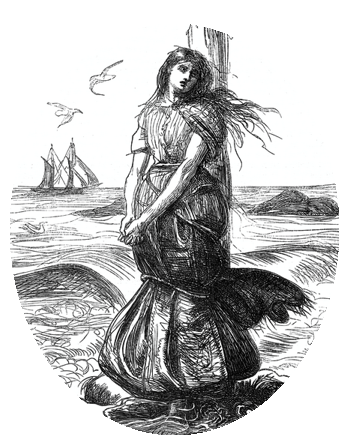 Margaret Lauchlane, in her sixties, was tied to a stake “a good way in beyond the other, and she was first despatched [sic], in order to terrify the other to a compliance with such oaths and conditions as they required.” However, young Margaret Wilson remained steadfast, singing the 25th Psalm “from verse 7th, downward a good way, and read the 8th Chapter to the Romans with a great deal of cheerfulness, and then prayed.” Just as she was about to go under someone pulled her up and asked if she would pray for the King, adjuring her to say “God save the King”. She replied, “God save him, if he will, for it is his salvation I desire.” She refused, however, to renounce her faith, whereupon she was thrown back into the water and drowned.2
In response to persecution many of the so-called Covenanters fled their homeland to find refuge in Ireland. By the mid 1700s many would participate in a great Scots-Irish immigration to America in search of religious freedom. In 1715 the Craighead family, Irish Presbyterians led by patriarch and minister Thomas Craighead, arrived in America. Craighead’s charismatic and animated sermons moved audiences to tears, yet in turn, his radical views were offensive to many. Thomas passed his hard-line views down to his son Alexander who began his public ministry in 1735 in Lancaster County, Pennsylvania.
Alexander’s entrance into public ministry coincided with the period in America known as the “Great Awakening” when preachers like George Whitefield traveled across the land proclaiming the Gospel. Whitefield, a so-called “New Light”, engendered controversy of his own.
New Light preachers tended to be charismatic and of either the Presbyterian or Congregational faith, preaching to crowds of thousands. Some of them would shun cities where the Episcopal Church held sway and head to the back country, not only to preach, but to settle. Their particular religious fervor, an affront to more traditional and staid faiths, was labeled seditious – “innovators, disturbers of the peace of the church, sowers of heresies and sedition”.3
Indeed, the Carolina (South and North) backwoods were a perfect fit for these “radicals”, be they followers of Whitefield or later of Alexander Craighead. In 1741 London’s Society of the Propagation of the Gospel sent Reverend Richard Locke (Anglican Church) as a missionary among the German settlers of Pennsylvania. He would later travel throughout the region and report his findings to officials in London, expressing a special disdain for Whitefield and his followers. The area was overrun with them!
A great many Papists, but the Country is so much covered with woods & some hundred miles round tis impossible to know, but it is very much over spread with New Lights Whitefield’s Followers; Covenanters who receive their Sacrament with a gun charg’d and drawn sword; & profess they’l fight for Christ against civil Magistrates.4
The Presbyterian Church of Scotland, founded by John Knox in 1560 (the year Scotland freed itself from Catholicism), set the tone for adherents, both present and future:
The first Confession of Faith prepared by Knox and his associates, asserted explicitly the right and duty of the people to resist the tyranny of their rulers. This was the result of the reformation being carried on by the people.5
This was, of course, two centuries before the American revolutionary era. In the sixteenth century, before the Reformation of 1560, government and religion were enmeshed, and corruptly so. As such, Scotland’s Parliament wasn’t representing the people; thus, the church arose and “became their great organ for resisting oppression and withstanding the encroachments
of their sovereigns.”6
Alexander Craighead appears to have taken those founding principles to heart (and then some!). As Scott Syfert points out, “[T]he ramifications of Knox’s political views were fundamental to New Lights such as Craighead. The English kings, Craighead believed, were usurpers who had lost their legitimacy to rule as a result of their having abandoned true Protestantism in favor of satanic Anglicanism.”7
Craighead led his congregation in 1743 “with uplifted swords, their separation from the Crown which had so impiously violated Covenant engagements on both sides of the Atlantic.”8 On that day the congregation adopted their own “declaration” (in part):
We do also testify against James, duke of York, his having any legal right to rule over this realm, by reason of his Popishprinciples . . . We do likewise enter our testimony against George the I. his having any legal right to rule over this realm,because he being an outlandish Lutheran;and likewise against George the II., for their being sworn prelatics, the heads of malignants, and protectors of sectarian heretics . . . and for their being established head of the Church by the laws of England.9
Outside his circle of followers, Craighead made few friends and, no doubt, many enemies. While the Quakers didn’t seem to mind that he spoke his mind, His Majesty’s representatives thought Craighead’s pamphlets and sermons to be seditious, treasonous and a distraction.
Alexander Craighead left for Virginia sometime between 1749 and 1752 and then made his way to Mecklenburg County, settling on the Rocky River. There he found a people living far removed from civil authority who much preferred to govern themselves.
Craighead had a captive audience of like-minded Scots-Irish brethren and he freely “poured forth his principles of civil and religious government, undisturbed by the jealousy of those in authority”.10 The people he led endured hardships of the backwoods pioneer which included, by necessity, confrontations with native Indians. He organized several churches in the region.
The representatives who met in Charlotte in May of 1775 were members of these congregations. Four years before meeting at Charlotte they had fought together at Alamance against the royal governor’s troops. As one historian wrote:
Under the teachings of Craighead, it is not strange that these people should be among the first to conceive the idea of Independence, to announce it to the world in their convention held in May, 1775, and with their fortunes and lives to sustain that idea through the trying scenes of the Revolution.11
Juxtapose the Reformation of 1560 with the Mecklenburg Declaration and one wonders if history was repeating itself two centuries later. It would seem to be possible.
 Thanks for stopping by! For more stories like this one, consider subscribing to Digging History Magazine. Purchasing a subscription entitles you to subscriber benefits (20% off all services, including custom-designed family history charts) AND a chance to win your very own custom-designed family history chart! Details here (or click the ad below).
Footnotes:
- Documenting the American South: Colonial and State Records of North Carolina, “Petition
from inhabitants of Mecklenburg County concerning North Carolina church laws”, accessed at
http://docsouth.unc.edu/csr/index.html/document/csr10-0446 on May 27, 2026. - Alexander S. Morton, Galloway and the Covenanters; or, The Struggle for Religious Liberty in the South-west of Scotland (Paisley: Alexander Gardner, 1914), 413-414.
- Rev. William Henry Foote, Sketches of Virginia, Historical and Biographical (Philadelphia: William S. Martien, 1850), 219.
- Benjamin F. Owen, “Letters of Rev. Richard Locke and Rev. George Craig”, Pennsylvania
Magazine of History and Biography, Volume 24 (Philadelphia: Historical Society, 1900), 474. - Charles Hodge, The Constitutional History of the Presbyterian Church in the U. S. of A., Part I: 1705-1741, (Philadelphia: William S. Martien, 1839), 58.
- Ibid.
- Scott Syfert, The First American Declaration of Independence? (Jefferson, North Carolina: McFarland & Company, Inc., 2014), 31.
- Charles A. Hanna, The Scotch-Irish: or, the Scot in North Britain, North Ireland, and North America (Volume 2) (New York: G.P. Putnam’s Sons, 1902), 41.
- Ibid.
- Hanna, 43.
- Ibid.