
Have you ever thought about how many ancestors one person could possibly have? Mathematically speaking, taking one’s family tree out thirty generations would result in about a BILLION ancestors. Taking it out forty to fifty generations would result in approximately a TRILLION ancestors — more people than have EVER lived on the earth!
Of course, that has never happened (or ever will), but why is that? The answer is pedigree collapse.
Pedigree collapse is defined as “the phenomenon in which ancestral inbreeding causes the number of a descendant’s ancestors to be smaller than that predicted by a binary tree:
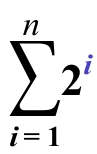
where n represents number of generations.”1
Researchers and theoreticians have hypothesized that historically eighty percent of all marriages have been between second (or closer) cousins. Some geneticists also estimate that every person on planet earth is at least a fiftieth cousin to everyone else.
Family researchers may not see pedigree collapse for several generations, but inevitably it will pop up as you climb the family tree. For my own family (starting from my father), it occurs in the fourth generation when first cousins, John Clayton Hall and Catherine Kate Hall, married in 1879.
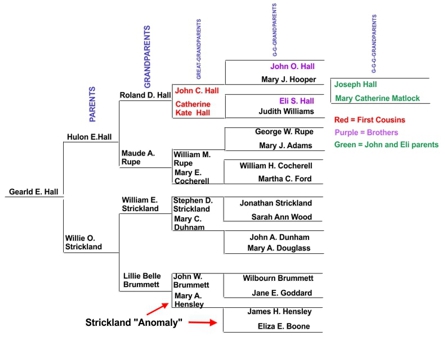 As the chart shows, John Clayton’s father was John Oxly and he was a brother to Catherine’s father Eli. Consequently, for the sixth generation Hall line pedigree collapse occurs because there are shared grandparents for John C. and Catherine — Joseph Hall and Mary Catherine Matlock.
I haven’t come across any other instances of pedigree collapse in the Hall line . . . yet. There is, however, an anomaly of sorts on the Strickland side. Mary Angeline Hensley was both my 2nd great-grandmother and my 3rd great-aunt.
CRAZIES, BLACK SHEEP AND MURDERERS (OH MY!)
Let’s face it — everyone has relatives they’re not necessarily proud of. Harper Lee, author of acclaimed novel To Kill A Mockingbird, said it best:
You can choose your friends but you sho’ can’t choose your family, an’ they’re still kin to you no matter whether you acknowledge them or not, and it makes you look right silly when you don’t.2
The “anomaly of sorts” mentioned above unravels like this:
My three-times great grandmother Eliza Boone (Mary Angeline Hensley’s mother) married James Henry Hensley at the age of eighteen in 1855. Eliza was born in Rankin County, Mississippi and she and James were married in Lafayette County, Arkansas.
Sometime after their first child John was born in 1856, James and Eliza migrated to Jack County, Texas to become cattle ranchers. Their daughter Mary Angeline was born in 1857, followed by another daughter, Pink, in 1861 and one more son, Henry, circa 1862.
James Henry Hensley died in February of 1865 at the age of thirty-six, leaving Eliza with four children and a cattle ranch to run. Eliza married John Wesley Brummett probably around 1866 or 1867 in Jack County.
The family was enumerated in 1870 with Eliza’s four Hensley children and two of their own, Lizzie (3) and Wilborn (4 months). Eliza’s oldest daughter, Mary Angeline Hensley, was thirteen years old. Another daughter, Sarah Belle Brummett, was born around 1871.
There appears to have been some hanky-panky going on though. According to Hamilton County, Texas history, John Wesley and Mary (Hensley) Brummett came to the county in 1874. John had married his step daughter (I haven’t been able to locate the marriage record, however), and if the divorce records are correct, his and Eliza’s divorce was not finalized until April 7, 1879 in Jack County. A distant cousin believes J.W. and Mary ran off to Illinois (his birth place) and then returned to settle in Hamilton County, though their first child was born in Kansas.
After reading testimony and depositions regarding attempts by Eliza’s family to get on the Dawes Commission Rolls (Indian Rolls), I strongly suspect there was “bad blood”. Throughout the proceedings, every single person in Eliza’s family, including Eliza herself, never once acknowledged or mentioned Mary Angeline as her daughter (sort-of-like “you’re dead to me”). By the way, Eliza and other family members were unsuccessful in their attempt to get on the rolls — they made it the first time and had it overturned (identity of an ancestor too sketchy apparently).
John Wesley Brummett had fathered three children with Eliza. He fathered SEVENTEEN children with Mary. Two of those children died shortly after birth and one daughter, Maggie May (age four), died in 1900 of a snake bite. After Mary died in 1906 (my theory — he killed her with all those kids!) he married Mary Owen, a widow with four children of her own. They had one child together, Lincoln, born around 1908-9. Impressively, J.W. Brummett fathered TWENTY-ONE children!
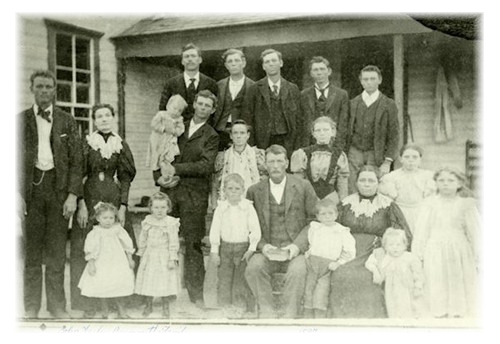
Despite whatever hanky-panky might have occurred, John Wesley Brummett appears to have become a pillar in his community. He helped purchase land for the Fairy Church of Christ in 1896 and was a faithful member until his death in 1935. In a related story, I wrote an extensive article, entitled “Dying (or Lying) to Get on the Dawes Rolls (or, how my ancestors were Indians one minute and the next, not so much)”, featured in this 2025 issue featuring the “Sooner State” of Oklahoma. Eliza and her family, or at least her sister Martha, were desperately trying to convince the Choctaw tribe that they were of Native American descent. If you have ancestors who tried to get on the Dawes Rolls and failed (or, for that matter, succeeded), it’s quite a tale!
I categorize this story (at least somewhat) under the heading of “black sheep” — in my family research I haven’t found any crazies or murderers (yet).
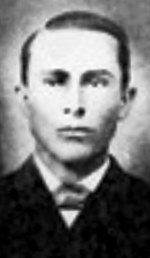 While researching family history for my Aunt Patsy I did run across both a “crazy” and an attempted murderess. First of all, my aunt didn’t know much about her father’s side of the family. She had never seen a picture of her grandfather. I located a picture of George Thornton Lawson – she wept for joy. Having never seen a picture of George she certainly had no idea of his parentage.
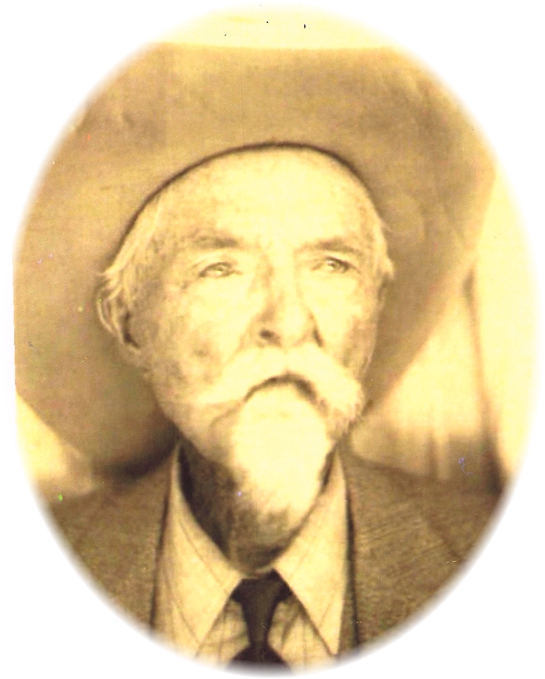 George was the son of Henry William and Nancy Catherine (Potts) Lawson. Henry had immigrated to America from England. By trade he was a tailor. Henry came to America through New Orleans, and as the family legend goes, was determined to marry an “Indian princess”. He headed to Alabama. Princess or not, he married Nancy Catherine Potts around 1861. Nancy was twenty-five years younger than Henry. All seemed well. I’ve since discovered deed records in Colbert County from the 1870s indicating the couple was selling land to various individuals.

However, in 1880 I noticed an anomaly in the census records. Nancy was enumerated twice – once at the family home in Colbert County and again as an inmate at the Alabama insane hospital in Tuscaloosa. Whatever did that mean?
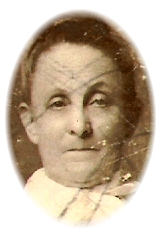 With a little digging I found a Lawson researcher who had uncovered the likely story. It seems that Nancy tried to kill Henry and instead of jail she was apparently sent to Tuscaloosa. Perhaps she suddenly snapped unexpectedly, and rather than jail she was committed to the asylum.
Whether or not she was unhinged enough to warrant commitment to the state’s insane asylum is unclear. What is clear, via subsequent census records, is that Henry eventually left Alabama with the children and headed west to Texas.
In 1900 Nancy was enumerated as a married woman with six children and living at the Bryce Insane Hospital in Tuscaloosa. Her family, unbeknownst to her, had left her behind. Much the same record appeared in the 1910 and 1920 censuses at the hospital.
Nancy died on June 10, 1925 and was buried in the hospital’s cemetery, her family long gone. Her husband Henry had died in Kaufman County, Texas in 1897; her son George had died in 1913 in Dallas County — perhaps, unbeknownst to her.
What about your family . . . any crazies, black sheep or murderers?
 Thanks for stopping by! For more stories like this one, consider subscribing to Digging History Magazine. Purchasing a subscription entitles you to subscriber benefits (20% off all services, including custom-designed family history charts) AND a chance to win your very own custom-designed family history chart! Details here (or click the ad below).

Footnotes: