

I wrote this article several years ago as newsletter editor of the South Plains Genealogical Society (SPGS), and presented it as a “theory”. We simply don’t know for sure, as you will see.
By the way, if you’re interested in exploring your family history (or you’ve been working on it for years), consider joining SPGS. On Saturday, May 9, we will be celebrating the 65th anniversary of our founding at our regular meeting at Mahon Library (Community Room) at 10:00 a.m. More info here: https://spgstx.org/
Long-time Lubbockites are no doubt familiar with the story of how our fair city came by its name. Articles have been published over the years in the Lubbock Avalanche-Journal. You might think the article title a bit odd, but there’s another story (theory) to be told.
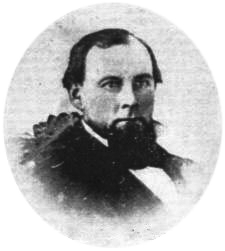 Thomas Saltus Lubbock was born on November 29, 1817 in Charleston, South Carolina to parents Henry Thomas Willis and Susan Ann (Saltus) Lubbock. At the age of seventeen Thomas went to New Orleans and became a cotton factor. A cotton factor worked with cotton planters to market and sell their product, acting as a broker for a commission.
That career was short-lived after Thomas heard about the Texas Revolution. He then marched to Nacogdoches with Captain William Cooke’s New Orleans Greys and participated in the Siege of Bexar, the Revolution’s first major campaign. Lubbock then set out to once again acquire an honest living, taking a job on an upper Brazos River steamboat.
Unbeknownst to Lubbock the Revolution continued as Santa Ana laid siege to the Alamo and later General Sam Houston, in turn, laid waste to the Mexican forces at San Jacinto. Meanwhile, his brother Francis Richard Lubbock had arrived in 1836 and would later serve as Texas governor during the Civil War. In 1838 twenty-one year-old Thomas sailed from Galveston back to New Orleans.
Three years later he served as lieutenant in a combined political-military-commercial fiasco (as it turned out to be) known as the Texas-Santa Fe Expedition. The expedition, conceived by Republic of Texas President Mirabeau Lamar, was tasked with establishing a trade route to Santa Fe and, hopefully, persuade New Mexicans to join the new republic.
The party, consisting of merchants and civil commissioners protected by the military force, headed out from Kenney’s Fort about twenty miles north of Austin on June 19, 1841. Traveling north and crossing the Brazos River they arrived in present-day Parker County on July 21.
Their intentions were to travel northwest and find the Red River, but instead mistook the Wichita River for the Red and had to backtrack. Meanwhile, the Mexican guide had disappeared. Fighting off both Indians and starvation, the expedition eventually reached Quitaque Creek in present-day Motley County. Not knowing how to best descend the steep Caprock, part of
the military force was sent ahead to locate some New Mexican settlements.
After finally making it across some rather difficult terrain, and expecting to be welcomed with open arms by New Mexicans, the group was instead met with armed resistance. New Mexico Governor Manuel Armijo had been informed of the expedition and sent forces to dissuade the Texans. Around the area of present-day Tucumcari, without a shot being fired, the expedition force surrendered itself into Mexican hands.
Thomas was among those captured and he and his men were marched to Mexico City and confined in the Santiago Convent. Ever the adventurer, Lubbock escaped by jumping from a balcony and made his way home to Texas.
Lubbock continued serving in various military campaigns, and by the early 1860’s he was an avid secessionist, a member in good standing of the Knights of the Golden Circle (KGC). KGC sought to establish a slave-holding empire throughout the South, stretching all the way to Central America, with Havana as the center of the so-called “golden circle”.
Lubbock accompanied other secessionists to Virginia and in June of 1861 petitioned President Jefferson Davis for “authority to raise a company or battalion of guerrillas”.1 Impressed with this band of Texans, Davis wholeheartedly welcomed their support.
While still in Virginia, Thomas Lubbock, Benjamin Franklin Terry and fifteen other Texans organized as independent rangers who would act as civilian scouts for the Confederate Army. Lubbock and Terry both served as battlefield aides at the “First Bull Run” and were afterwards authorized to raise a cavalry regiment. The regiment, the Eighth Texas Cavalry, was more
commonly known as Terry’s Texas Rangers, however.
Terry served as the regiment’s colonel and Lubbock its lieutenant colonel. Lubbock fell ill and left the regiment at Nashville. While recuperating at Bowling Green Hospital, Lubbock received word that Colonel Terry had been killed at the Battle of Woodsonville (Kentucky) on December 17, 1861. Lubbock, however, never recovered nor returned to active duty, dying shortly thereafter in January of 1862.
Good story and a worthy namesake for our beloved city, right? But, what if Lubbock wasn’t actually his family surname? And, why in the world would I ever propose such a thing? For the answer to that question, read on.
Can you imagine Lubbock being named Willis — I can’t. However, the actual and historical family name from which Thomas Saltus Lubbock descended could possibly have been Willis and not Lubbock. I came across research notes assembled by Eric Lubbock, 4th Baron Avebury, and was intrigued. Following is a summary of his research and various hypotheses.
The story begins with Reverend Henry Willis, born in 1738 or 1739 to John and Temperance (Hames) Willis. Following a brief naval career, Henry Willis married Jane Lubbock, daughter of Richard and Jane Lubbock. They married in 1765 and together had six or possibly seven children. Their third child, Richard Lubbock Willis, was born in 1770.
It is assumed Jane died in childbirth since Henry remarried in 1784. Prior to his remarriage Henry had attended Merton College and Oxford in pursuit of a career as a minister. He later served as Rector of Little Sodbury and Vicar of Wapley. Henry remarried yet again in November of 1792 and subsequently took an appointment to a parish in East Shefford, Berks.
Along the way Henry obtained land and had the expectation of inherited wealth if certain conditions were met. However, Eric noted that Henry’s wealth may have been depleted by the extravagances of his son Richard Lubbock Willis. In his original will dated October 3, 1783 Henry wrote: “Having by some Indiscretions (but much more by disappointments) only a small matter to leave behind me . . .”2
A codicil dated August 30, 1791 referred to son Richard’s excesses and/or improprieties:
My eldest son Richard Lubbock Willis having by his Infamous Conduct forfeited my favour & affection I here cut him of [sic] from any Share of my Effects except for one shilling to be paid him after my decease by my Executors.
Henry’s daughters Temperance Jane and Ann Packer Willis immigrated to Augusta, Georgia, either with Richard Lubbock or perhaps on their own in 1794 following Henry Willis’ death. Richard Lubbock Willis immigrated sometime around 1790 to Augusta. A man named Richard Lubbock married thirteen year-old Diana Sophia Sandwich in Beaufort, South Carolina and
their first child, Henry Thomas Willis Lubbock, was born on July 24, 1792. Was it possible Richard had dropped the Willis surname? Had he named his first child after his father to regain favor with him? Or, was this even the same person?
According to Eric it seems likely Diana Sophia’s husband was somehow related to the Willis family since she was named executrix of the will of Ann Packer Willis, “formerly of Grovesend, Alverton, Gloucestershire, sister of Temperance Jane Willis”. Even though the Gloucester Record Office had concluded Richard had dropped the Willis surname, Eric believed that may not have been the case.
How could the ill-tempered and disinherited Richard Lubbock Willis possibly be the same man who was by all accounts a pillar of his community? While Ann Packer Willis had referred to Diana Sophia as her “sister and wife of my brother Richard” Eric proposed Diana’s Richard may have been a first cousin named Richard Lubbock, and referred to colloquially as her “brother”. That might be a stretch too, but still intriguing.
Richard the “black sheep” was in England in June of 1794 following the birth of Henry Thomas Willis Lubbock in 1792. If this Richard was indeed the father, then perhaps he had returned to England before Henry Willis’ death in December of 1794 to get back in the good graces of his father.
Henry Thomas Willis Lubbock studied medicine and was a practicing physician until 1819. He married Susan Ann Saltus and in 1817 Thomas Saltus Lubbock was born — and later his name attached to our city.
 Based on Eric Lubbock’s research, this story does beg the question: was Thomas Saltus Lubbock really a Lubbock or descended from a man named Henry Willis? Perhaps this particular bit of history isn’t so settled after all, eh?
If you’d like to read more about Eric Lubbock’s research and theories, see the footnotes below and draw your own conclusions. Eric Reginald Lubbock was born in 1928, inherited his title in 1971 and served in the House of Lords. The long-time politician was passionate about family history and passed away on February 14, 2016 at the age of 87.
 Thanks for stopping by! For more stories like this one, consider subscribing to Digging History Magazine. Purchasing a subscription entitles you to subscriber benefits (20% off all services, including custom-designed family history charts) AND a chance to win your very own custom-designed family history chart! Details here (or click the ad below).

Footnotes: