

Seawillow
Seawillow is a rather lyrical and poetic sounding name isn’t it? I ran across this name while researching a friend’s African American ancestry. Where in the world did this name come from? Wouldn’t you just know – there’s a story behind it!
A search for the name at any newspaper archive site reveals the name appears to have been used most often by Texans – and rightly so, since the story from which the name evolved occurred around Beaumont in 1855. She was the very first baby girl given this special name.
October 22, 1855 must have been a stormy day to be born along the Neches River, which meanders southeast over 400 miles from eastern Van Zandt County, emptying into the Gulf of Mexico below Beaumont. Today, the area averages well over 40 inches of rain per year and flooding occurs on average every five years.
The day Reverend John Fletcher and Amelia (Rabb) Pipkin’s daughter came into the world was a perilous one as flood waters trapped them on a raft, along with several family slaves, the situation dramatically heightened since Amelia was about to give birth. The oft-told story is related at the Find-A-Grave page for Seawillow Margaret Ann Pipkin Wells [edited]:
The day Seawillow was born there was a disastrous flood on the Neches River in Beaumont, Texas. The Rev. John F. Pipkin and his pregnant second wife, Amelia Rabb, and some of the family slaves were swept along on a raft. Just before the birth of his daughter, a human chain was formed by the slaves to fasten the raft to a willow tree. The Reverend looked up through the branches of the Willow tree and gave thanks to God for the safe delivery of his daughter in the midst of the flood water. Thus, the name Seawillow.1
In 1942 one of John’s sons, Stephen Walker Pipkin, was interviewed and related how he was born in the family home “maintained on Briar Island”2, located in the southwest part of Orange County. S.W. had just purchased his father’s former ranch property.
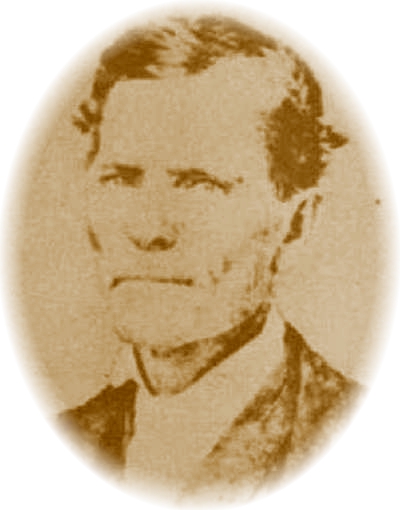 John Pipkin had a significant influence all those years ago, earning the sobriquet “father of Beaumont churches.”3 For some time following his arrival from Arkansas in the early 1850s, he was the only preacher in those parts. Despite his staunch Methodist faith, he “was not guided by denominational fetters, but extended to all who needed wise counsel or humane help in sorrow, sickness or death, and who served at baptisms, marriages or funerals as the general ministrant of Beaumont.”4 Like many other preachers of the day John was bi-vocational, operating a saw mill and also served three terms as County Judge for Jefferson County.
John, the son of Reverend Lewis and Mary Pheraby (Beasley) Pipkin, was born in Sparrow Swamp, Darlington District, South Carolina on August 14, 1809. After his first wife died he married Amelia Rabb, a widow, in 1844 in Conecuh County, Alabama. By 1850 the family was living in Ouachita County, Arkansas.
After Amelia died on January 23, 1867 of pneumonia John’s married daughter, Nora Lee Holtom, wrote a letter to Stephen Warner Pipkin asking whether he could take Seawillow (or board her for a year) so she could attend school with her cousin Mary. John would gladly compensate for her care. However, by 1870 Seawillow was living with John and his new wife Mattie.
Seawillow grew up in Beaumont and later taught school in Caldwell County (Luling and Lockhart). On November 22, 1883 she married Littleberry Walker Wells. On February 22, 1886 their first daughter was born – Seawillow Lemon – and the first of several descendants named Seawillow.
The farming community where they lived continued to grow and by 1899 required a post office. It was named “Seawillow”. Littleberry died on January 30, 1900 and Seawillow on May 30, 1912, both buried in the Wells Cemetery in Seawillow.
My friend’s great grandmother, Seawillow Hubert, was born on December 14, 1880 in Orange County. Although I haven’t been able to find a direct connection to the Pipkin family, it’s certainly possible one of her ancestors was either a slave of John Pipkin’s or the story of how his slaves had helped save his daughter’s life became legend among slaves and former slaves.
Through the years, Seawillow Hubert’s name was spelled (or transcribed) variously as “Serilla”, “Suvilla”, “See William” or “Seawillow”. It was a bit difficult to discern what her actual name was, but this Seawillow’s Find-A-Grave entry clearly records her name. I had to know where that name came from, so thus the little “side adventure”.
Not only did I learn the likely origins of her name, I learned quite a bit of history about the Beaumont area and the Pipkin family. While I usually write these types of articles about surnames, this turned out to be quite interesting learning the history of someone’s forename.
 As I always like to say, keep digging!
 Thanks for stopping by! For more stories like this one, consider subscribing to Digging History Magazine. Purchasing a subscription entitles you to subscriber benefits (20% off all services, including custom-designed family history charts) AND a chance to win your very own custom-designed family history chart! Details here (or click the ad below).

Footnotes:
- Seawillow Margaret Ann Pipkin Wells, Find-A-Grave, accessed at https://www.findagrave.com/memorial/23299755/seawillow-margaret_ann-wells on December 22, 2018.
- The Orange Leader, August 11, 1942, accessed at https://texashistory.unt.edu/ on December 22, 2018, 3.
- Reverend John Fletcher Pipkin, Find-A-Grave, accessed at https://www.findagrave.com/memorial/38175157/john-fletcher-pipkin on December 22, 2018.
- Robert J. Robertson, Her Majesty’s Texans: Two English Immigrants in Reconstruction Texas (College Station: Texas A&M Press, 1998), 89.